Acne concerns

Acne is one of the most common skin conerns worldwide, particulary for teenagers. You may have heard that Acne is caused by 'clogged pores', but what does that actually mean?
Acne is a result of hair follicles being blocked. Everyone's skin has sebaceous glands attatched to hair follicles. These produce an oily substance called 'sebum', to lubricate the hair and skin. This prevents it from drying out. When an excess production of sebum occurs, it mixes with dead skin cells to clog the follicle and create what we call comedones, and what are known as 'clogged pores'. Comedones are commonly known as either blackheads and whiteheads.
A whitehead appears when the comedone is close to the surface of the skin. A blackhead on the other hand, appears if the comedone is open to the surface of the skin, causing the dead skin cell, sebum, and bacteria mixture to oxidize. and turn a dark color.
What about other types of acne?
There are many different types of acne besides just whiteheads and blackheads? So why do these happen? Cutibacterium acnes is a type of bacteria that lives on the skin. It thrives in the oily environment that is a cause of the excess sebum. The bacteria therefore contaminates the comedone- triggering inflammation and creating papules, nodules, cysts, and pustules. These are all different types of 'pimples'.

Blackheads
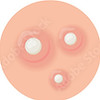
Whiteheads
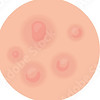
Nodules
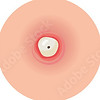
Pustules
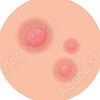
Papules
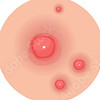
Cystic acne
What is fungal acne?
Fungal acne differs from any other type of acne- as it is not caused by cutibacterium acnes in the sebaceous glands. Fungal acne describes the hair follicles becoming infected with an overgrowth of the fungus: malassezia yeast. It appears as small red bumps with pus inside, and is typically found on the forehead. Fungal acne can burn, itch, and be painful for some.
The malassezia yeast is able to grow quickly on hot, damp, or sweaty skin. Leaving the skin hot and damp, or touching the skin frequently can therefore be direct causes of fungal acne
Why does excess sebum production happen?
Excess sebum production can happen for numerous internal reasons. For example
It can also be a result of stripping the skin of its natural oils, for example by over cleansing or using harsh products- as the skin overcompensates for this by producing more sebum.
In teenagers, it's commonly thought that testosterone triggers the overproduction of sebum
- Hormonal fluctuations
- Stress
- Overconsumption of refined sugars and saturated fats
What ingredients target acne?
In order to treat acne one can both employ certain active ingredients and barrier repair ingredients.
Active ingredients exfoliate the skin and attack the bacteria- such as Beta Hydroxy acids. BHA's penetrate deep into the skin, as they are oil-soluble and can seep through the skin's sebum. In the pores they destroy the 'glue' holding togehter the dead skin cells, to reduce blackheads and whiteheads. They also loosen dead skin cells on the surface of the skin. Many acne products also kill poor clogging bacteria, such as cultibacterium acnes.
Since acne commonly happens when the skin barrier is damaged or dehydrated it is imprtant to not be overly aggressive with actives, as well as to moisturize the skin consistently and apply non pore clogging or 'non- comedogenic' products.